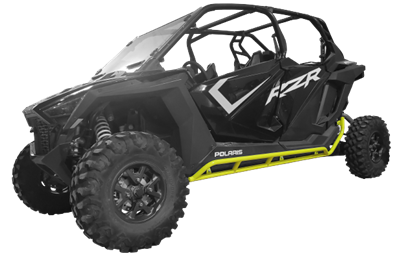
There is a real difference between running your RZR Pro XP for an hour of laps you already know and putting sixty or seventy trail miles on it in a single day. The second one exposes anything you have been ignoring, usually somewhere around mile forty. Here is what we check before a long-haul day, in the order we check it.
Exhaust and Heat Management First
Long, low-speed technical sections generate a lot more sustained heat than short blasts, and stock exhaust systems are not built with all-day trail heat cycling in mind. If you have not already upgraded your exhaust, a long-haul day is exactly when a factory heat shield or restrictive muffler shows its limits. This is also a good time to double check header bolts and muffler clamps, since heat cycling loosens fasteners faster than most people expect.
While you are down there, look at everything that lives near the exhaust: wiring looms, plastic panels, anything zip-tied in optimism. Sustained heat migrates, and the melted harness that ends a trail day rarely announces itself in the first hour. Five minutes with a flashlight before the ride beats a trailside diagnosis at dusk.
Suspension for the Terrain You Will Actually See
Whatever compression and rebound settings work for your local trails are a starting point, not a final answer, once you are on ground you have not ridden before. Soften compression slightly if you are heading into rockier, slower terrain than usual, and firm it back up if you know you are hitting faster, more open sections later in the day. Check it at your first fuel stop, not at the end of the ride.
Weight changes the math too. A long-haul day usually means a passenger, coolers, tools, and spares the machine does not carry on practice laps. If the loaded weight is meaningfully different, account for it in your settings rather than wondering why the machine wallows in the first whoops section.
The Small Stuff That Ends a Long Day Early
- Tire pressure, checked cold before you leave and again at your first stop once the day has warmed up.
- Belt condition and tension, since a marginal belt that survives short rides will not always survive a full day of heat and load.
- Skid plate and A-arm guard bolts, torqued before you go, not after you hear something loose.
- A real tool kit and a spare belt, not the one that came in the glovebox.
Add the boring consumables to the pile: water for every person aboard, a tow strap, a tire plug kit with a way to air back up, and a headlamp even if you swear you will be back by three. Every experienced trail group carries the kit that saved them once. The machine list and the survival list are both shorter than the day they rescue.
The Twenty-Minute Rule
None of this is complicated. It is just the difference between a machine that is set up for an afternoon and one that is set up for a full day on unfamiliar ground. Spend twenty minutes on it before you leave the trailer, not twenty miles in when something starts rattling. The habit scales, too: the same walk-around that protects a trail day is most of what a machine needs to live a long life between real services.
After the Ride: The Five-Minute Debrief
The end of a long day is when the machine tells you the truth, so listen before you load the trailer. Feel the hubs and belt housing for unusual heat, look for fresh oil or coolant weep, and note anything that rattled in the last ten miles, because it will not fix itself by next weekend. Knock the worst mud off before it dries into concrete, top off fuel if storage is more than a couple of weeks out, and write down the suspension settings that finally worked on that terrain. The next long-haul day starts with the notes you take on this one.